
Metal buildings are popular throughout South Texas because they offer durability, flexible layouts, and practical solutions for commercial, agricultural, industrial, and storage needs. From warehouses and workshops to equipment garages and agricultural facilities around Corpus Christi, metal structures provide property owners with versatile spaces for different purposes. However, one common challenge is maintaining comfortable indoor temperatures, especially during the region’s long, hot summers. Without proper ventilation, heat can accumulate inside a metal building, making the space uncomfortable and potentially affecting equipment, stored materials, and daily operations.
Proper ventilation plays an important role in managing indoor temperatures, controlling moisture, and maintaining healthier indoor air. A well-designed ventilation system allows hot, stale air to escape while encouraging fresh air to circulate throughout the structure. For South Texas property owners, understanding how ventilation works can help improve building performance, reduce unnecessary cooling demands, and create a more comfortable environment throughout the year.
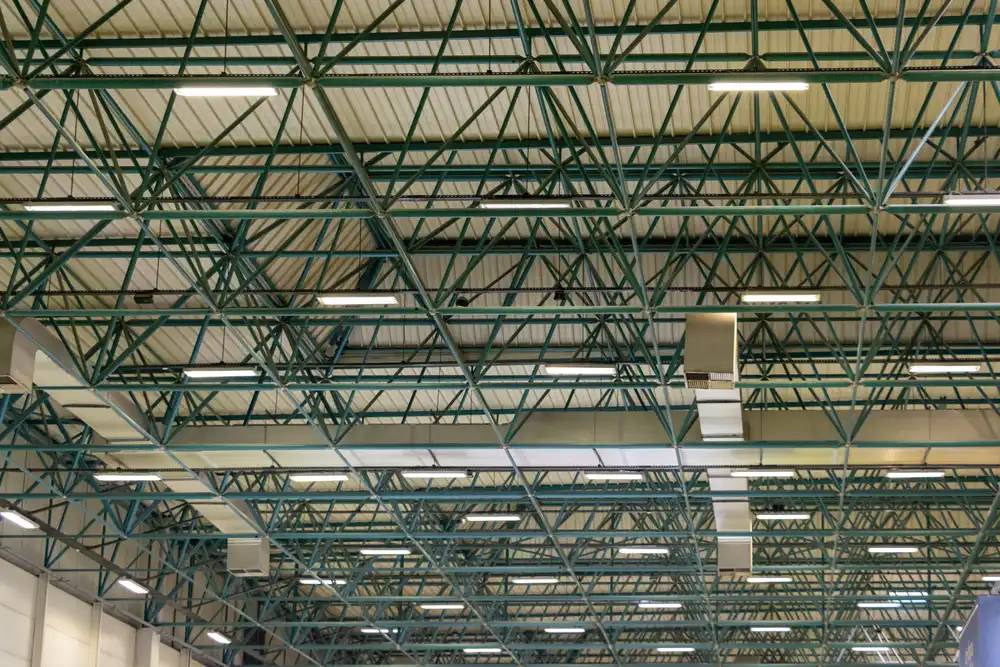
Why Metal Buildings Need Proper Ventilation
Metal buildings respond differently to heat than many traditional structures. Metal roofing and wall panels can absorb significant amounts of solar heat, particularly when exposed to direct sunlight throughout the day. As temperatures rise, the air inside the building can become trapped, creating uncomfortable conditions for employees, customers, or anyone spending extended periods indoors.
This problem is especially noticeable in Corpus Christi, where hot weather and high humidity are regular considerations for property owners. According to the National Weather Service’s South Texas climate information, summer temperatures across the Coastal Bend commonly reach the mid-90s, with overnight temperatures often remaining in the 70s. These conditions can make it difficult for an improperly ventilated metal building to cool down naturally, even after the sun goes down.
Ventilation helps address this challenge by creating a continuous path for air movement. Instead of allowing hot air to collect near the ceiling, properly positioned ventilation openings and exhaust systems help remove accumulated heat. This improves indoor comfort and makes the building more practical for everyday use.
Reduces Excessive Heat Buildup
One of the biggest advantages of proper ventilation is its ability to reduce heat buildup inside metal structures. During sunny afternoons, heat can accumulate beneath the roof and remain trapped in the upper portions of the building. Without an effective way to release it, indoor temperatures may become significantly higher than outdoor conditions.
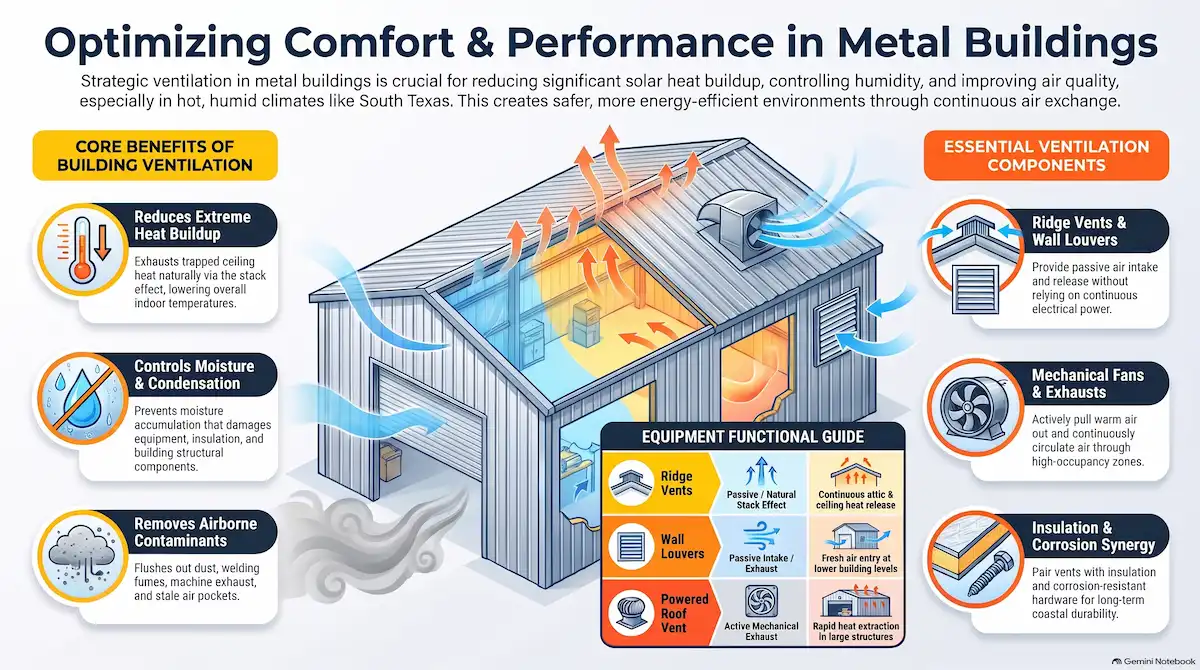
Roof vents, ridge vents, and mechanical exhaust fans can help remove this trapped hot air. As warm air escapes through higher openings, cooler replacement air can enter through properly positioned lower openings. This natural movement, commonly called the stack effect, helps create circulation without relying entirely on mechanical cooling equipment.
For businesses operating warehouses, workshops, and storage facilities in Corpus Christi, reducing excessive heat can make daily activities more manageable. Employees may work more comfortably, and property owners may find it easier to maintain reasonable indoor temperatures. Although ventilation does not replace insulation or air conditioning, it can become an important part of an overall temperature-management strategy.
Improves Air Circulation and Indoor Comfort
Good ventilation does more than remove hot air. It also prevents stagnant air pockets from developing in different areas of the building. In large metal structures, certain corners, enclosed workspaces, and areas behind equipment may receive very little natural airflow, causing temperatures to feel inconsistent throughout the interior.
Properly positioned wall openings, intake vents, circulation fans, and exhaust systems help distribute air more evenly. Ceiling fans and industrial air circulators can also improve comfort by increasing air movement around occupied spaces. This can make warm conditions feel more manageable, particularly in buildings where employees perform physical tasks.
Air circulation is especially valuable for South Texas businesses that operate throughout the day. Workshops, automotive facilities, agricultural buildings, and commercial warehouses often have different ventilation requirements depending on their activities. A system designed around the building’s layout and intended use can help eliminate uncomfortable hot spots and improve the overall working environment.
Helps Control Humidity and Condensation
Humidity is another important concern for metal buildings along the Texas Gulf Coast. Warm, moisture-filled air can create uncomfortable indoor conditions and contribute to condensation when it comes into contact with cooler metal surfaces. Over time, excessive moisture may affect insulation, stored materials, equipment, and certain building components.
This is particularly relevant in Corpus Christi and surrounding Coastal Bend communities, where moisture from the Gulf can influence indoor building conditions. Ventilation can help remove moisture generated by everyday activities, including washing equipment, operating machinery, and storing damp materials. However, simply bringing in more outdoor air does not always reduce humidity because South Texas outdoor air can already contain substantial moisture.
For conditioned buildings, ventilation should work together with appropriate air conditioning and dehumidification. The American Society of Heating, Refrigerating and Air-Conditioning Engineers (ASHRAE) provides technical guidance on indoor air quality and moisture management, including the importance of controlling humidity in hot and humid climates. Proper insulation, vapor control, and moisture management should also be considered when planning a ventilation system.
Removes Stale Air, Odors, and Indoor Pollutants
Metal buildings used for commercial and industrial purposes may contain airborne particles, fumes, dust, and unpleasant odors. Activities such as welding, painting, equipment maintenance, vehicle operation, and material handling can introduce contaminants into the indoor environment. Without adequate ventilation, these substances may accumulate and affect indoor air quality.
Exhaust ventilation helps remove contaminated air from specific areas before it spreads throughout the building. For example, workshops may benefit from dedicated exhaust systems near equipment that produces fumes or airborne particles. Warehouses may require strategically placed ventilation openings to support general air exchange and reduce stale indoor conditions.
Property owners should remember that general ventilation is not a substitute for specialized exhaust systems when hazardous substances are present. OSHA’s guidance on Indoor Air Quality explains why proper ventilation, moisture management, and pollutant control are important in occupied buildings. Selecting the right system based on the building’s actual activities helps create a safer and more comfortable environment.
Can Reduce Dependence on Air Conditioning
Cooling a large metal building can become expensive, particularly during the hottest months in South Texas. Air conditioning systems must work harder when excessive heat continuously accumulates inside the structure. Poor airflow can also make conditioned spaces feel uncomfortable, even when cooling equipment is operating.
Proper ventilation can help reduce some of this cooling burden by allowing accumulated heat to escape before it spreads throughout the building. In unconditioned spaces, natural ventilation and exhaust fans may provide meaningful relief during suitable weather conditions. In air-conditioned buildings, however, ventilation must be carefully balanced to avoid introducing excessive hot and humid outdoor air.
Combining ventilation with reflective roofing materials, insulation, and properly sized cooling equipment can produce better overall results. Property owners should consider the building’s size, roof design, occupancy, and daily operating schedule when evaluating improvements. The goal is not simply to move more air but to create an efficient system that supports comfortable indoor conditions without unnecessary energy consumption.
Choosing the Right Ventilation System for a Metal Building
Not every metal building requires the same ventilation setup. A small equipment garage may benefit from basic roof and wall vents, while a large commercial warehouse may need mechanical exhaust fans and strategically positioned air intakes. The right solution depends on the structure’s dimensions, ceiling height, insulation, intended use, and local environmental conditions.
Common ventilation options include:
- Ridge vents: Installed along the roof peak to allow accumulated hot air to escape naturally.
- Wall louvers: Provide openings for outdoor air to enter or leave the building while helping protect against direct weather exposure.
- Exhaust fans: Mechanically remove hot, stale, or contaminated air from interior spaces.
- Circulation fans: Improve air movement throughout occupied areas and reduce stagnant conditions.
- Powered roof ventilators: Help remove accumulated heat from larger buildings where natural airflow may not be sufficient.
For properties throughout Corpus Christi, ventilation equipment should also be selected with coastal weather in mind. Salt-laden air, high humidity, heavy rainfall, and strong winds can affect exposed components over time. Choosing corrosion-resistant materials, weather-protected openings, and properly rated equipment can help improve long-term performance.
Why Insulation and Ventilation Should Work Together
Ventilation is important, but it should not be treated as the only solution for temperature control. Insulation helps slow the transfer of heat through metal roofing and wall panels, while ventilation helps remove accumulated heat and manage indoor air conditions. When these two features work together, they can create a more comfortable and energy-efficient building.
For example, an insulated metal roof can reduce the amount of heat entering the building during sunny afternoons. Properly designed ventilation can then help release heat that still enters through openings, daily operations, and other sources. This combination is especially useful for South Texas properties that experience extended periods of high temperatures.
Property owners should also consider whether the building is naturally ventilated or mechanically conditioned. An unconditioned storage building may benefit from generous ventilation openings, while an air-conditioned office or workspace requires a more carefully designed system that controls humidity and limits unwanted outdoor heat.
Maintain Your Ventilation System for Long-Term Performance
Even a properly designed ventilation system needs regular maintenance. Dust, debris, insects, and other obstructions can reduce airflow through vents and louvers. Exhaust fans may also become less effective when their motors, blades, or electrical components are neglected.
Property owners should periodically inspect roof vents, wall openings, fan equipment, and protective screens. After severe weather, it is also important to check for damaged vent covers, loose components, and signs of water intrusion. In coastal communities such as Corpus Christi and Port Aransas, checking for corrosion is particularly important because salty air can accelerate deterioration of exposed metal components.
Professional inspections can help identify ventilation problems before they affect building comfort or performance. A qualified contractor can evaluate airflow, identify poorly ventilated areas, and recommend improvements based on the structure’s specific requirements.
Create a More Comfortable Metal Building in South Texas
Proper ventilation is an important part of making metal buildings more comfortable, functional, and practical for long-term use. By reducing heat buildup, improving air circulation, managing moisture, and removing stale indoor air, an effective ventilation system can address several common challenges associated with metal structures. These improvements are particularly valuable in Corpus Christi and throughout South Texas, where hot temperatures and coastal humidity can place additional demands on commercial and industrial buildings.
Whether you own a warehouse, workshop, agricultural structure, or commercial metal building, investing in the right ventilation approach can improve the indoor environment and support better building performance. Combining properly designed ventilation with insulation, routine maintenance, and appropriate cooling solutions helps create a structure that is better prepared for the demands of the South Texas climate.