Metal buildings have become a popular choice for homeowners, business owners, and property investors thanks to their durability, versatility, and cost efficiency. But one of the most common questions people ask before making an investment is simple: how long will it actually last? The answer depends on several factors, but in most cases, a well-built and properly maintained metal building can last anywhere from 40 to 70 years—or even longer. Understanding what impacts that lifespan can help you protect your investment and get the most value out of your structure.
Average Lifespan of a Metal Building
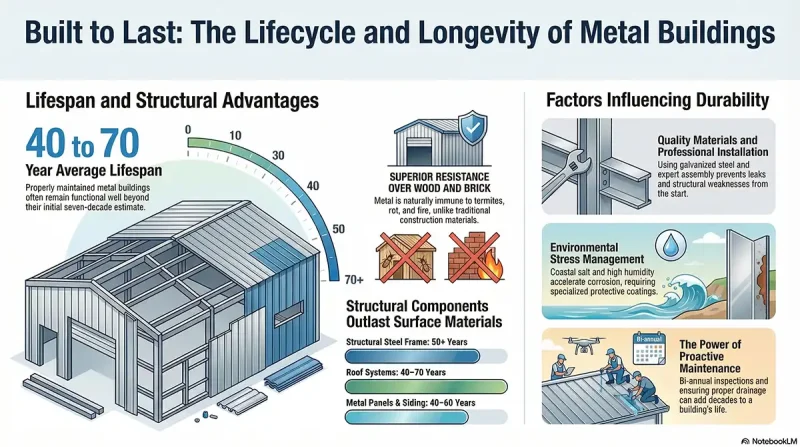
Metal buildings are designed with longevity in mind. Unlike traditional wood structures that are more vulnerable to rot, pests, and fire, steel buildings are engineered to withstand a wide range of environmental conditions. On average, you can expect:
- Structural steel frame: 50+ years
- Metal panels and siding: 40–60 years
- Roof systems: 40–70 years depending on material and maintenance
In many cases, the structural components outlast other parts of the building, meaning repairs or upgrades are usually cosmetic or surface-level rather than structural. With proper care, it’s not uncommon for metal buildings to remain functional well beyond their expected lifespan.
What Factors Affect the Lifespan of a Metal Building?
Not all metal buildings age the same way. Several key factors influence how long your structure will last and how well it performs over time.
Quality of Materials
The type and quality of steel used in your building play a major role in its durability. Galvanized or coated steel resists rust and corrosion far better than untreated materials. Higher-grade materials may cost more upfront but typically result in fewer repairs and a longer lifespan.
Installation and Workmanship
Even the best materials won’t perform well if the building is not installed correctly. Poor construction can lead to issues like leaks, loose panels, and structural weaknesses. Working with experienced professionals ensures your building is assembled to meet safety standards and withstand local weather conditions.
Climate and Environmental Conditions
Your location has a direct impact on how your metal building holds up over time. Coastal areas with high humidity and salt exposure can accelerate corrosion, while regions with extreme heat, heavy rain, or strong winds can put additional stress on the structure.
- High humidity can increase the risk of rust if not properly protected
- Strong winds can loosen fasteners or damage panels
- Heavy rainfall can expose weak points in roofing or sealing
Choosing the right coatings, finishes, and insulation for your environment can significantly extend your building’s lifespan.
Maintenance and Upkeep
Routine maintenance is one of the most important factors in how long your metal building will last. While metal structures require less maintenance than traditional buildings, they are not completely maintenance-free. Regular inspections and minor repairs can prevent small issues from turning into major problems.
Common Threats to Metal Building Longevity
While metal buildings are known for their strength, there are still a few common issues that can impact their lifespan if left unaddressed.
- Corrosion and rust due to moisture exposure
- Loose or damaged fasteners from wind or movement
- Roof leaks caused by worn seals or flashing
- Poor drainage leading to water pooling
- Lack of proper insulation causing condensation buildup
The good news is that most of these issues are preventable with proper planning and regular care.
How to Extend the Life of Your Metal Building
If you want your metal building to last as long as possible, a proactive approach makes all the difference. Simple steps taken consistently over time can add years—even decades—to your structure’s life.
Perform Regular Inspections
Inspect your building at least twice a year and after major storms. Look for signs of wear such as rust spots, loose screws, or damaged panels. Catching these early allows for quick and inexpensive fixes.
Keep It Clean
Dirt, debris, and standing water can contribute to corrosion over time. Cleaning your building periodically helps preserve protective coatings and prevents buildup that could cause damage.
Address Repairs Quickly
Small issues like a loose fastener or minor leak may not seem urgent, but they can lead to bigger problems if ignored. Prompt repairs help maintain the integrity of the entire structure.
Apply Protective Coatings
Modern metal buildings often come with protective finishes, but these can wear down over time. Reapplying coatings when needed helps guard against rust, UV damage, and weather exposure.
Ensure Proper Drainage
Good drainage around your building prevents water from collecting near the foundation or seeping into vulnerable areas. Gutters, downspouts, and grading all play a role in keeping your structure dry.
Metal Buildings vs. Traditional Structures
When comparing metal buildings to traditional wood or brick structures, longevity is one of the biggest advantages. Wood is susceptible to termites, rot, and fire, while brick can crack and require costly repairs over time. Metal buildings, on the other hand, offer:
- Resistance to pests and insects
- Non-combustible materials for added fire safety
- Greater durability in extreme weather conditions
- Lower long-term maintenance requirements
These benefits make metal buildings a smart long-term investment for both residential and commercial use.
Signs Your Metal Building May Need Attention
Even a durable structure will show signs of aging over time. Knowing what to look for can help you take action before problems escalate.
- Visible rust or discoloration on panels
- Water stains or leaks inside the building
- Warped or loose metal sheets
- Unusual noises during high winds
- Increased energy costs due to poor insulation
If you notice any of these issues, it’s a good idea to have a professional inspection to assess the condition of your building.
Is a Metal Building a Long-Term Investment?
For most property owners, the answer is yes. Metal buildings offer a combination of durability, flexibility, and cost savings that make them an excellent long-term solution. Whether you’re using it for storage, a workshop, commercial space, or even residential living, a properly maintained metal building can serve your needs for decades.
In many cases, the initial investment pays off through reduced repair costs, lower insurance premiums, and minimal maintenance requirements. When you factor in its lifespan, a metal building often proves to be more economical than traditional construction methods.
Secure Future – Contact Our Team Today
So, how long should you expect your metal building to last? With quality materials, proper installation, and consistent maintenance, you can realistically expect 40 to 70 years of reliable use—and often much longer. The key is taking a proactive approach to care and addressing small issues before they grow. A metal building isn’t just a short-term solution—it’s a durable, long-lasting investment that can stand strong for generations.