Building in Coastal Texas comes with challenges that homeowners in other parts of the country may not face as often. Properties around Corpus Christi and the Coastal Bend must be designed with strong winds, high humidity, heavy rain, salt-laden air, intense heat, and potential storm conditions in mind. Because the framing is a major part of a building’s structural system, choosing the right material can have long-term implications for durability and maintenance.
Steel framing is one option worth considering. While wood remains widely used in residential construction, steel framing offers several characteristics that can make it practical for certain homes, additions, commercial buildings, and other structures in South Texas.
Why Coastal Texas Construction Requires Special Consideration
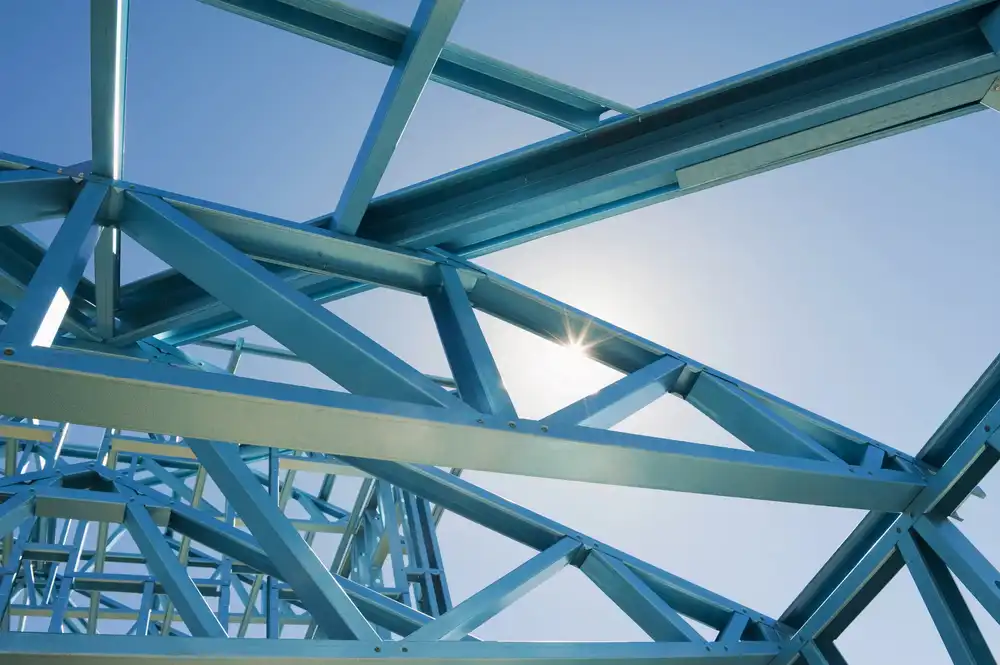
Corpus Christi’s location along the Gulf Coast means buildings can experience demanding environmental conditions throughout their service life. Wind is particularly important because coastal structures must be designed to transfer forces safely from the roof and walls through the foundation.
Texas also has specific windstorm requirements for properties in designated coastal areas. The Texas Department of Insurance explains that coastal properties must meet certain building standards to qualify for windstorm insurance through the Texas Windstorm Insurance Association (TWIA). Learn more about Texas windstorm inspections and requirements.
Corpus Christi’s current construction requirements also reflect the importance of wind-resistant design. The city’s Development Services Department provides specific requirements for new residential buildings, including engineered foundation and windstorm documentation. View Corpus Christi residential construction requirements.
Steel Framing Offers Consistent Structural Performance
One practical advantage of steel framing is its consistency. Steel framing members are manufactured to specific dimensions, which can help create predictable wall and structural assemblies.
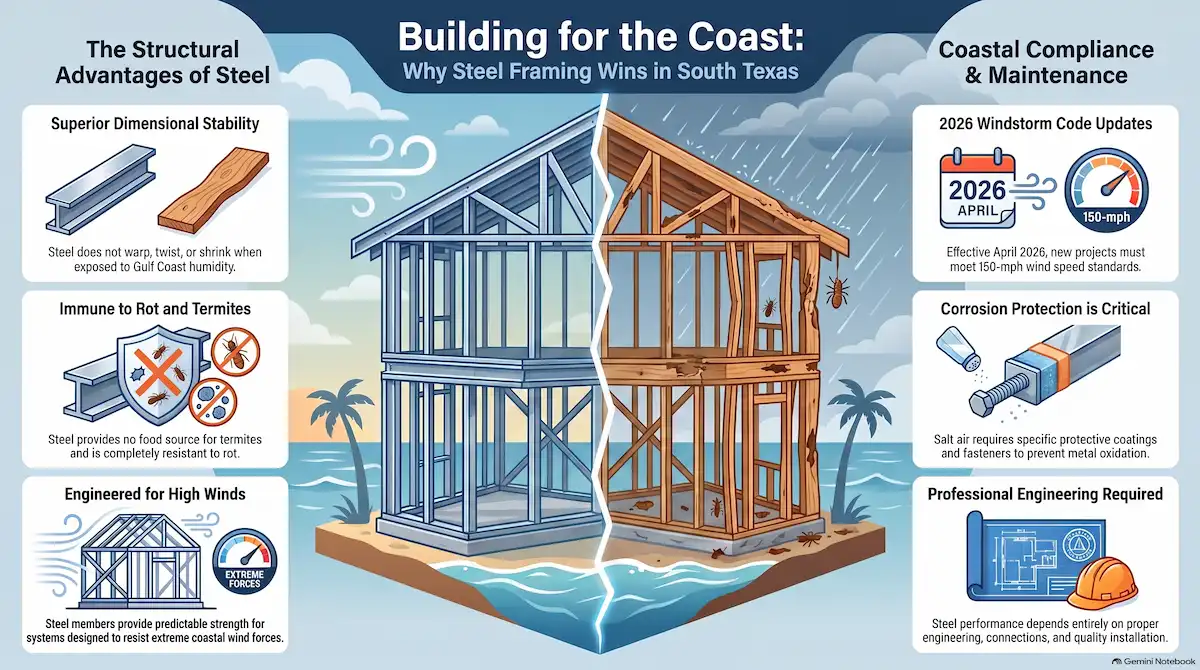
Unlike wood, steel does not naturally absorb and release moisture in the same way. This means it does not experience the same type of moisture-related swelling, shrinking, twisting, or warping that can affect wood framing.
For South Texas builders, this consistency can be useful when installing drywall, siding, windows, doors, and other finish materials. Straight and stable framing can help maintain accurate dimensions during construction.
The actual performance still depends on engineering, material specifications, connections, installation quality, and compliance with applicable building codes.
Steel Does Not Rot or Attract Termites
Another reason steel can be attractive in South Texas is its resistance to several problems associated with wood framing.
Steel does not rot, and it is not a food source for termites. This can be especially appealing in a warm climate where homeowners already need to pay attention to pest control and moisture management.
A steel-framed building can still contain wood components, including trim, cabinetry, flooring, roof components, or other materials that termites may affect. Therefore, steel framing does not eliminate the need for termite inspections and preventive maintenance.
Still, reducing the amount of structural wood can remove one potential source of concern for property owners.
Moisture and Corrosion Still Need Attention
Steel framing has advantages around moisture, but it is important not to confuse water resistance with corrosion resistance.
Coastal air contains salt and moisture that can accelerate corrosion of unprotected metal components. For this reason, the type of steel, protective coatings, fasteners, connectors, and installation details all matter.
Texas windstorm requirements also emphasize appropriate corrosion-resistant materials in applicable coastal construction. The Texas Department of Insurance provides guidance and requirements for windstorm construction and approved building products. Explore TDI’s current windstorm building-code information.
For a property close to the Gulf or exposed to coastal conditions, corrosion protection should be considered from the design stage rather than treated as an afterthought.
Steel Framing Does Not Warp Like Wood
South Texas weather can be tough on building materials. Heat, humidity, and changes in moisture can cause some materials to expand, contract, or change shape.
Steel does not react to moisture in the same way as wood. Its dimensional stability can make it attractive for projects where maintaining accurate framing dimensions is important.
This can help with the installation of finished materials and reduce certain problems associated with warped or twisted framing members.
However, other building components still move and respond to temperature and moisture. Proper construction of the entire building envelope remains essential.
Steel Can Support Flexible Building Designs
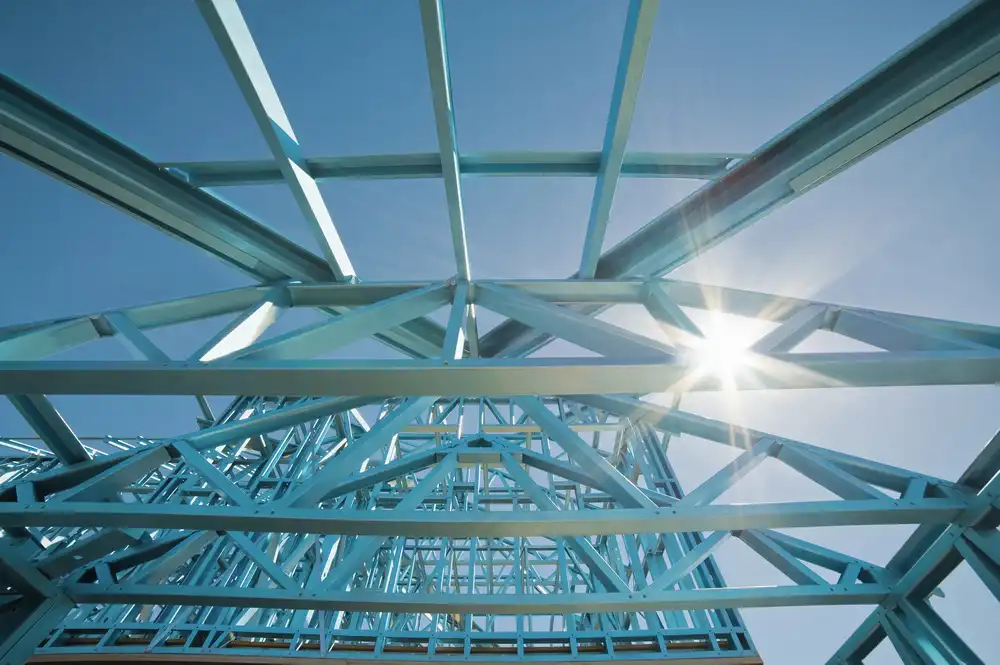
Steel framing can also be useful for projects requiring particular structural layouts. Depending on the system and engineering design, steel can accommodate open floor plans, longer spans, and specialized architectural requirements.
This may appeal to Corpus Christi homeowners building custom homes or planning larger additions where conventional framing may not provide the preferred structural solution.
For coastal projects, however, design decisions should also account for flood zones, foundation requirements, wind exposure, elevation, and site-specific conditions. Steel framing should be considered as part of the overall structural system rather than as an isolated upgrade.
What About the Cost of Steel Framing?
Cost is naturally one of the first questions homeowners ask. Steel framing may cost more or less than wood depending on the project, labor, material availability, engineering requirements, design complexity, and local construction conditions.
The initial material price should not be the only consideration. Property owners should also think about potential long-term maintenance, pest concerns, dimensional stability, and the demands of the coastal environment.
A qualified builder or structural engineer can compare the complete project costs rather than looking only at the price of individual framing materials.
Corpus Christi’s 2026 Wind Requirements Matter
Current regulations make structural planning particularly important for new coastal construction.
The City of Corpus Christi published a January 2026 bulletin explaining that the Texas Department of Insurance adopted the 2024 International Code Council building codes for windstorm purposes effective April 1, 2026. The bulletin lists a 150-mph basic wind speed for applicable residential windstorm areas under the 2024 IRC.
TDI also states that, beginning April 1, 2026, Windstorm Certificate of Compliance applications must be certified under the 2024 IRC or 2024 IBC for applicable projects.
For anyone planning construction in Corpus Christi or another designated coastal area, these requirements make professional structural design and proper documentation especially important.
Is Steel Framing Right for Your South Texas Project?
Steel framing is not automatically the best choice for every home or building. The right material depends on the property’s location, design, budget, wind exposure, corrosion environment, foundation, and construction goals.
For the right project, however, steel can offer several practical benefits:
- Resistance to rot and termites
- Dimensional stability
- Consistent manufactured dimensions
- Compatibility with engineered high-wind construction
- Noncombustible structural material
- Potentially lower concerns about some moisture-related framing problems
The key is making sure the framing system is properly engineered and installed for the specific property.
Build for the Coastal Texas Environment
For homeowners and builders in Corpus Christi and South Texas, choosing structural materials should involve more than comparing upfront prices. Coastal conditions demand attention to wind, moisture, corrosion, drainage, foundations, and the overall building envelope.
Steel framing can be a practical choice when its advantages match the needs of the project. Its strength, stability, termite resistance, and compatibility with engineered construction systems make it worth discussing with a qualified local builder or structural engineer.
If you are planning a new home, addition, commercial structure, or other project in Corpus Christi or the Coastal Bend, start by evaluating the property’s specific conditions and applicable building requirements. Choosing the right framing system at the beginning can help create a structure designed for the environment it will face for decades to come.